Originally published in Japanese by Nikkan SPA!. Reporting and writing by Yu Taguchi.
The moment of parting with a parent arrives without warning. Sometimes it is peaceful, surrounded by family. Sometimes it is silent, alone, with no one to notice.
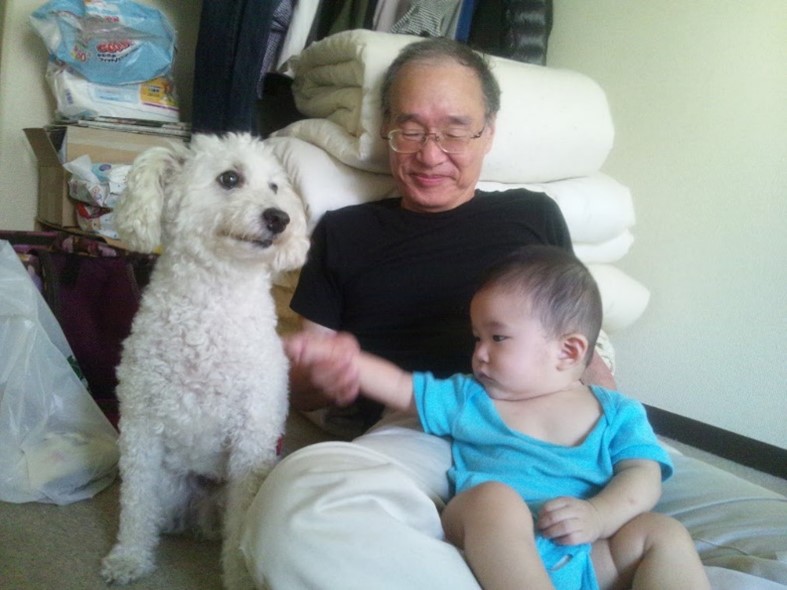
In July of this year, the person who confronted her father’s final days with dementia was Yu Taguchi — manga original story author and reporter, who published the dementia nonfiction manga The World as Seen Through Dementia (Takeshobo, 2023). What did this journalist, who specializes in welfare reporting, witness in her own father’s death? (The following is written by the author herself. At the author’s request, the deceased’s face is shown without mosaic processing.)
I am the original story author of the dementia nonfiction manga The World as Seen Through Dementia (Takeshobo, 2023).
While I was in the middle of writing that very story, my own father developed dementia. He died at 78, having refused all care, in what I have come to call a “happy solitary death” at his apartment. The estimated date of death is July 17, 2024. The exact cause awaits the autopsy results, but summer claims many elderly lives. As of this writing, there is no timeline for when the results will be released. His body was discovered by a neighbor on August 10. In the summer heat, after a month, the body was covered in maggots, badly decomposed — recognizable only by the shape of his skull.
When an Alcoholic Develops Dementia
I first noticed something was wrong the previous summer. He would not answer the phone no matter how many times I called. My father was a Showa-era media man — drinking at lunch was normal for him. From there, alcohol dependence took hold, and he became violent. I was regularly hit and kicked until I reached high school, so I have no fond memories of my father. After he retired, my mother divorced him, and he clung even more tightly to alcohol. It was not unusual for his phone to go unanswered, but this time it had been nearly a month.
Alarmed, I visited. I found him standing blankly in a room with no air conditioning. From that point, consulting with care professionals around me, I immediately had an air conditioner installed and applied for long-term care certification. I also applied for public assistance.
Psychiatric Hospital or Home Care: Two Choices
After applying for public assistance, I consulted with my father’s caseworker. For an elderly person with both alcohol dependence and dementia to receive care, they need to stop drinking. The two options were: hospitalization in a psychiatric ward for detox, or finding a home care provider or day service willing to work with an actively drinking client. I consulted an acquaintance — the CEO of an elder care company — who had faced a similar situation. Hospitalization would simply replace alcohol with medication, likely leading to being bedridden. Home care meant the drinking would continue.
If my father had been younger, I might have pursued addiction treatment. But he was 77. My conclusion was: let him live the rest of his life as he pleases.
Caregiving Is a Ceremony of Self-Satisfaction for the Surviving Family
Having suffered from my father’s alcoholism, I was not confident I could care for him without committing abuse. I consulted Kosuke Sakamoto, a dementia care specialist. He told me: “Caregiving is a ceremony for the surviving family to feel satisfied with themselves and to accept the death. Just do enough that you can feel you did something small and kind for your father.” Those words saved me. If I could maintain a distance where I felt I had done “a small kindness,” I could manage to be gentle.
And so my caregiving life began.
Unexpectedly Peaceful Days
My father’s care period turned out to be a surprisingly peaceful year. He never stopped drinking, and he stubbornly refused to let care services into his home, but his consumption dropped significantly. Sometimes he mistook me for a stranger, bowing deeply and saying, “You are truly kind. Thank you.” The days passed gently enough that I felt I might be able to forgive the past. Despite incontinence and other issues, he was well enough to visit my home to see his grandson.
The Day My Father Appeared with 55,000 Yen in Cash
On July 15, 2024, my father showed up at my door unannounced. Since developing dementia, he had done this several times. This time, he suddenly said, “I’ve been saving,” and held out 55,000 yen in cash. After his retirement, he had usually asked me for money — it was rare for him to give any. Smoking a Lucky Strike, he watched a video of his grandson’s school sports day and said, “I wish I could have gone.” His expression was one of deep happiness. His final words to me were: “In your life ahead, be careful not to be deceived by men.” Then he went home.
The Call from the Police
On the night of August 10, 2024, I received repeated calls from an unknown number ending in “0110.” I later learned that police station numbers always end in 0110. I ignored the calls. At 10 PM, officers came to my door. “Your father was found dead at his apartment. Considerable time has passed since death, and the body is in a state of decomposition. We do not suspect foul play, but we need to take your statement.”
I had called my father on July 17 to thank him for the money. The call did not connect. After that, I called about twice a day to check on him. I had been thinking it was time to visit — and then this.
Family registries are now digitized. After my divorce, I had separated my registry from my father’s; my mother and sister had done the same. With no documents to confirm his identity, I was taken to a police interrogation room for DNA testing.
Unable to See My Father’s Remains
A solitary death is initially treated as a potential crime. I was questioned about our family relationships.
“My father was an alcoholic. After my parents’ divorce, my father and I, my mother and I, my sister and I, my father’s sister and I, and my father’s former colleague and I — we were all in contact. But my father himself had been blocked by every single one of them.” I gave each of their phone numbers. My mother had died of cancer the year before. The officer said: “I see. After your parents’ divorce, you were the only one in the family everyone could reach. You were the one holding the family together. First your mother, now your father. You must be exhausted.” That was the first time I cried. Perhaps it had always been me holding the broken family together.
In summer, elderly people die. The mortuary was full of decomposed bodies, so he could not be placed there. I was told it might be traumatic and that I should reconsider. But I desperately wanted to see my father one last time. In the photograph, there was a single remaining maggot on his face, but the bone structure was unmistakably my father’s.
His claim that he had “saved money” was a lie. His electricity had been cut off; he had been living by flashlight. That is why the air conditioner was not running. There was no sign of recent meals — only a mountain of empty beer cans. I felt relieved. It was a death that suited him. The smell was too severe to retrieve any belongings, and a specialized cleaning crew was brought in immediately.
Caregiving Is the Acceptance of a Slow Death
As with my mother’s death, I felt no great shock at my father’s passing. Accompanying a parent through cancer treatment, or through dementia care, is the act of witnessing a “slow death.” Unlike a sudden traffic accident, it is a gradual process of accepting that your parent is dying.
Because of that, even while waiting for autopsy results and not knowing when a funeral could be held, I have been able to laugh about it with friends and acquaintances — as a story of “a troublesome parent’s final act of filial devotion.” Kosuke Sakamoto sent me this message: “What a wonderful final chapter. Coming to deliver 55,000 yen — how incredibly dignified. You gave him good care. Hold your head high!”
Sakamoto added: “Honestly, most people probably won’t see this as a good way to die. The way you and I feel about it is probably rare. But if you had caved to society’s pressure and forced him into a facility, he never could have kept drinking the beer he loved until the end, and he never could have stayed close with his daughter and grandson.”
I have no regrets. When my father was well, his favorite saying was: “I spent most of my career as a talk show producer. I want you to write everything about me — the good and the bad. That is the responsibility of someone who made a living off other people’s stories.”
Sitting with my now twelve-year-old son, looking at photos of his grandfather, I raised a glass alone. In heaven, I hope he is drinking as much as he wants.
Note: Kosuke Sakamoto, as a care professional, requested to add a supplementary statement to avoid misunderstanding: “Honestly, I think most people will not view this as a good death. The way Yu and people like us feel is probably the minority. But I do not believe that placing someone in a facility is always the happiest choice, and that is why I wanted to add this as a care professional.”
Interview and text by Yu Taguchi
Author’s Note
This article was originally published in Japanese by Nikkan SPA! in August 2024. The Japanese original is available here: https://nikkan-spa.jp/2025254.
In preparing this version, I have made small editorial revisions for international readers — including the anonymization of one private individual cited in the original.
I am publishing the bilingual version here for two reasons.
First, my father gave me explicit permission to write about him while he was still alive. His exact words, repeated for years: “I made my living off other people’s stories. Write everything about me — the good and the bad. That is my responsibility.” He was a former TV producer who had spent decades putting other families on television. He believed his own life should not be exempt. The article was published with his face uncovered at my own request, in keeping with this wish.
Second, I am a welfare journalist who specializes in elder care, dementia, and disability. The night the police came to my door, I had been writing about other families’ losses for years. The role I had built in my professional life — interviewer, witness, advocate — collapsed in the same instant the role of “daughter” took over. This article was my attempt to hold both at once. I do not believe these two roles can ever truly be separated.
Two notes for international readers:
— “Solitary death” (kodokushi) refers to a person who dies alone at home and is not discovered for some time. It is a recognized social phenomenon in Japan, particularly among elderly men living alone. It is not, in itself, a tragic ending — but the social conditions that produce it deserve close attention.
— Kosuke Sakamoto, the dementia care specialist quoted in the article, asked to add a clarifying statement himself. I am grateful that he did. His framing — “Caregiving is a ceremony for the surviving family to feel they did something kind” — became the principle that allowed me to be gentle with my father in the year before his death.
I am the second daughter of a broken family. I was the one everyone could still reach. This article is the closest I have come to writing about that.
— Yu Taguchi, Tokyo, April 2026